
Flow, Pressure & Gas Control
Define the gas conditions your experiment needs, from a single flow channel to a coordinated test setup.
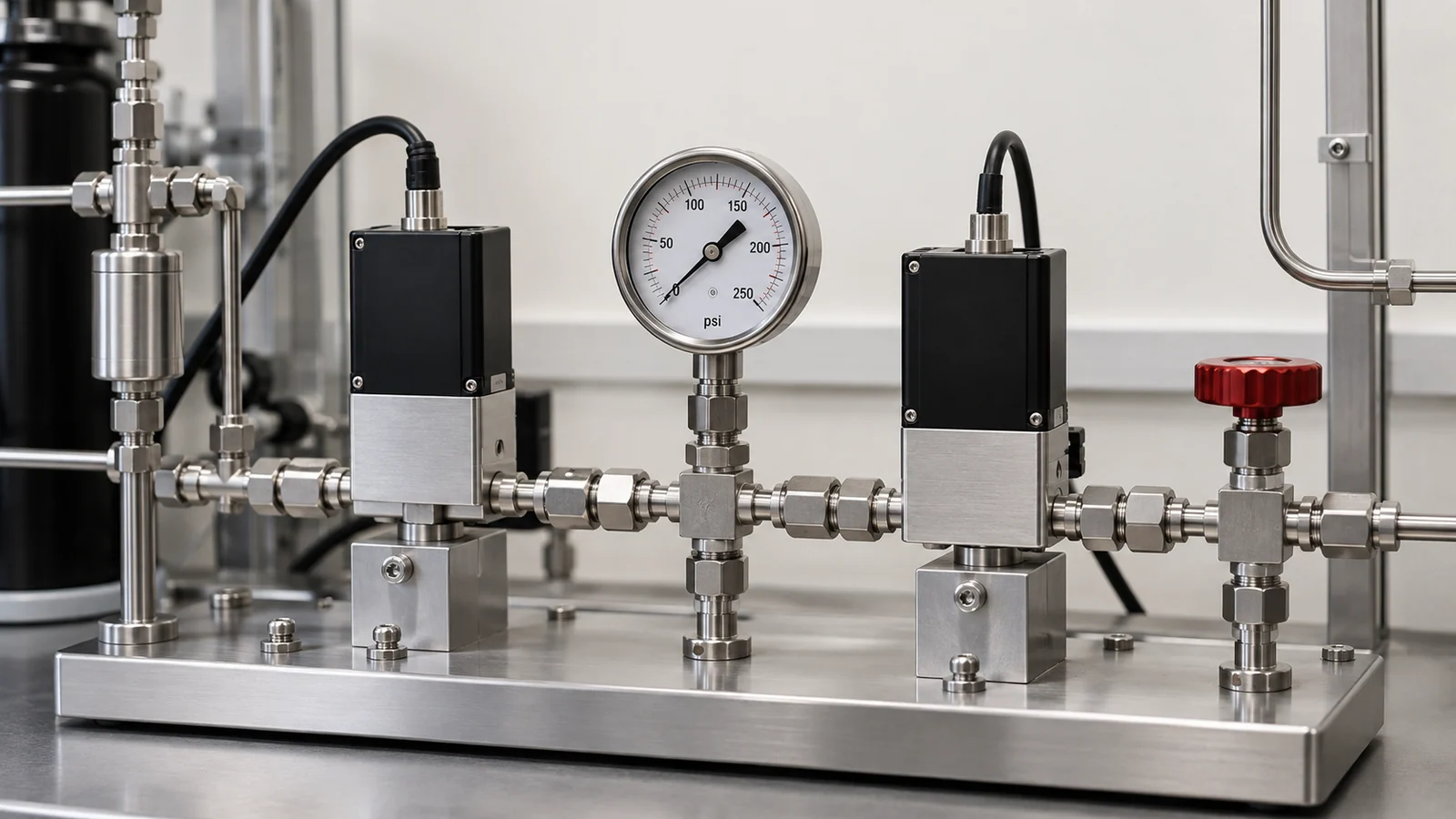
A useful gas control specification starts with the experiment: the gas or mixture, the required flow, the pressure at each connection and the behaviour needed when conditions change. Choosing an instrument by its maximum flow alone can leave important questions unanswered, particularly when pressure drop, low flow operation or changes in gas composition affect the setup.
Discuss mass flow measurement, flow control, pressure regulation and gas handling with SC Science as parts of one application. For a single instrument, share the operating range and connection details. For a multi-channel arrangement, describe how the channels interact, how setpoints are changed and which signals need to reach your existing control system. Wetted materials, seals, calibration gas and the stated reference conditions for flow should be agreed before a configuration is selected.
For research and industrial teams in Singapore, this approach keeps the enquiry focused on practical integration. A controller for a bench experiment may have different requirements from a component installed in a continuously operating test rig. Tell us about the operating environment, utilities and shutdown requirements so that the proposed scope can be reviewed against the actual application. Product suitability, calibration documentation and any integration work are confirmed for the agreed configuration.
Define the right configuration


Multi-channel Gas Setups
Describe channel count, gas combinations, control signals and operating sequence for an application-specific configuration review.
Brands previously sourced for this technology area.
Typical Applications
- ·Catalysis and reaction studies
- ·Controlled atmosphere experiments
- ·Gas delivery to materials test cells
- ·Flow and pressure control in research rigs
What to Include
- ·Gas names and mixture composition
- ·Normal and maximum flow, with units and reference conditions
- ·Inlet and outlet pressure
- ·Connections, signals and operating sequence
Tell us what your application needs
Share the operating conditions, interfaces and constraints that matter to your work.